Ecosystem Approach to Fisheries Management
An Ecosystem Approach to Fisheries Management (EAFM) is a fishery management approach which recognizes the biological, economic, social, and physical interactions among the components of ecosystems and attempts to manage fisheries to achieve optimum yield while while taking those interactions into account.
In 2016, the Council adopted an EAFM Guidance Document. This non-regulatory document articulates the Council’s ecosystem goals and policies, as well as recommendations to help transition from single-species management toward an approach that manages fisheries within a broader ecosystem context. The guidance document is organized around four ecosystem-related topics: forage fish, habitat, climate, and ecosystem-level interactions.
Since the approval of the EAFM Guidance document, the Council has worked to implement and advance a variety of management actions and activities associated with each of the four priority areas. Visit the pages linked below to learn more.


State of the Ecosystem
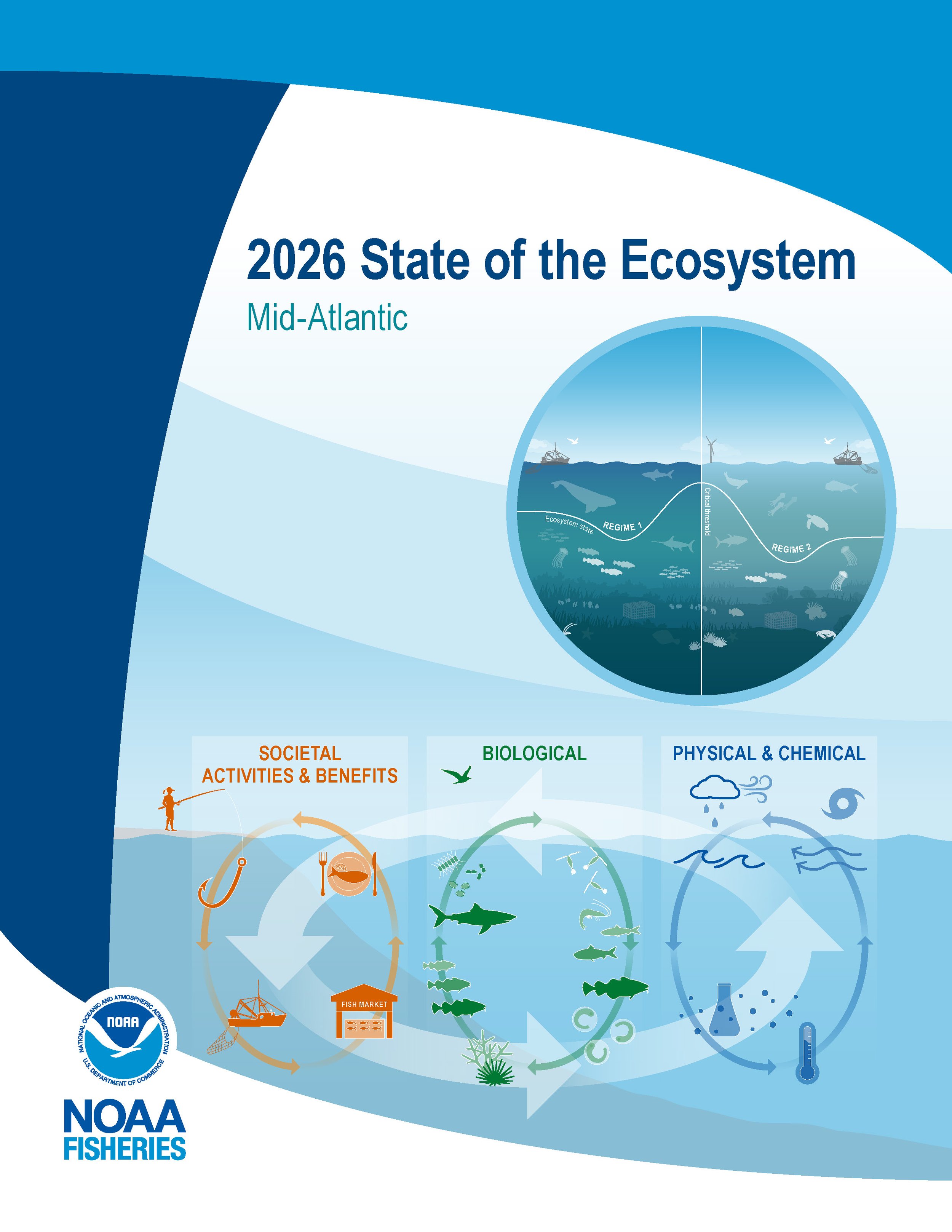
As part of EAFM implementation, the Council has collaborated with science and management partners to develop new ways of considering ecosystem information in the management process. Each year, the Council reviews a State of the Ecosystem (SOE) report developed by scientists at NOAA Fisheries in consultation with the Council and its SSC. The SOE report summarizes recent conditions in the Mid-Atlantic Bight ecosystem and provides information on management objectives assessed by a variety of ecological, environmental, economic and social indicators. The most recent SOE report is available here:
Visit the NOAA Integrated Ecosystem Assessment (IEA) webpage to learn more.
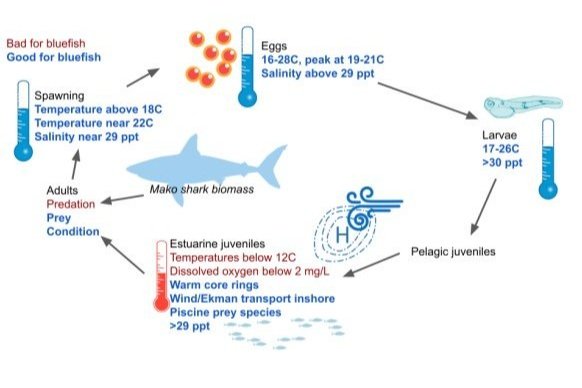
EAFM Risk Assessment

EAFM Structured Decision Framework
Source: Gaichas et al., 2016
The Council’s EAFM Guidance Document established a structured framework process to incorporate ecosystem considerations into the evaluation of policy choices and trade-offs as they affect Council-managed species and the broader ecosystem. The first step in the structured framework process includes identifying and prioritizing ecosystem interactions and risks through a comprehensive risk assessment. The initial risk assessment was approved by the Council in December 2017, and it is updated annually to incorporate new scientific information and analyses, reflects the Council’s current priorities, and be responsive to changing conditions.
Initial Risk Assessment: Mid-Atlantic EAFM Risk Assessment Documentation and Results (8/17/18)
Most Recent Update: 2026 EAFM Risk Assessment Update (June 2026)
Visit the EAFM Structured Decision Framework page to learn more.
Additional Resources
EAFM Guidance Document and Related Documents
EAFM Guidance Document, revised 2/8/19
Original Version (2016)
Overview of Mid-Atlantic EAFM Activities (November 2022)
EAFM Development Workshops:
Evolution Towards an Ecosystem Approach to Fisheries Management (2010)
Relevant Manuscripts
Implementing Ecosystem Approaches to Fisheries Management: Risk Assessment in the US Mid-Atlantic, Frontiers in Marine Science, S. Gaichas, G. DePiper, R. Seagraves, B. Muffley, M. Sabo, L. Colburn & A. Loftus (2018)
There Is no I in EAFM Adapting Integrated Ecosystem Assessment for Mid-Atlantic Fisheries Management, Coastal Management, B. Muffley, S. Gaichas, G. DePiper, R. Seagraves & S. Lucey (2021)
Learning by doing: collaborative conceptual modelling as a path forward in ecosystem based management, ICES Journal of Marine Science, G. DePiper, S. Gaichas, B. Muffley, G. Ardini, J. Brust, J. Coakley, K. Dancy, G.W. Elliott, D. Leaning, D. Lipton, J. McNamee, C. Perretti, K. Rootes-Murdy, M. Wilberg (2021)
NOAA Fisheries Resources
Related Pages
Staff Contact
Brandon Muffley, bmuffley@mafmc.org, (302) 526-5260